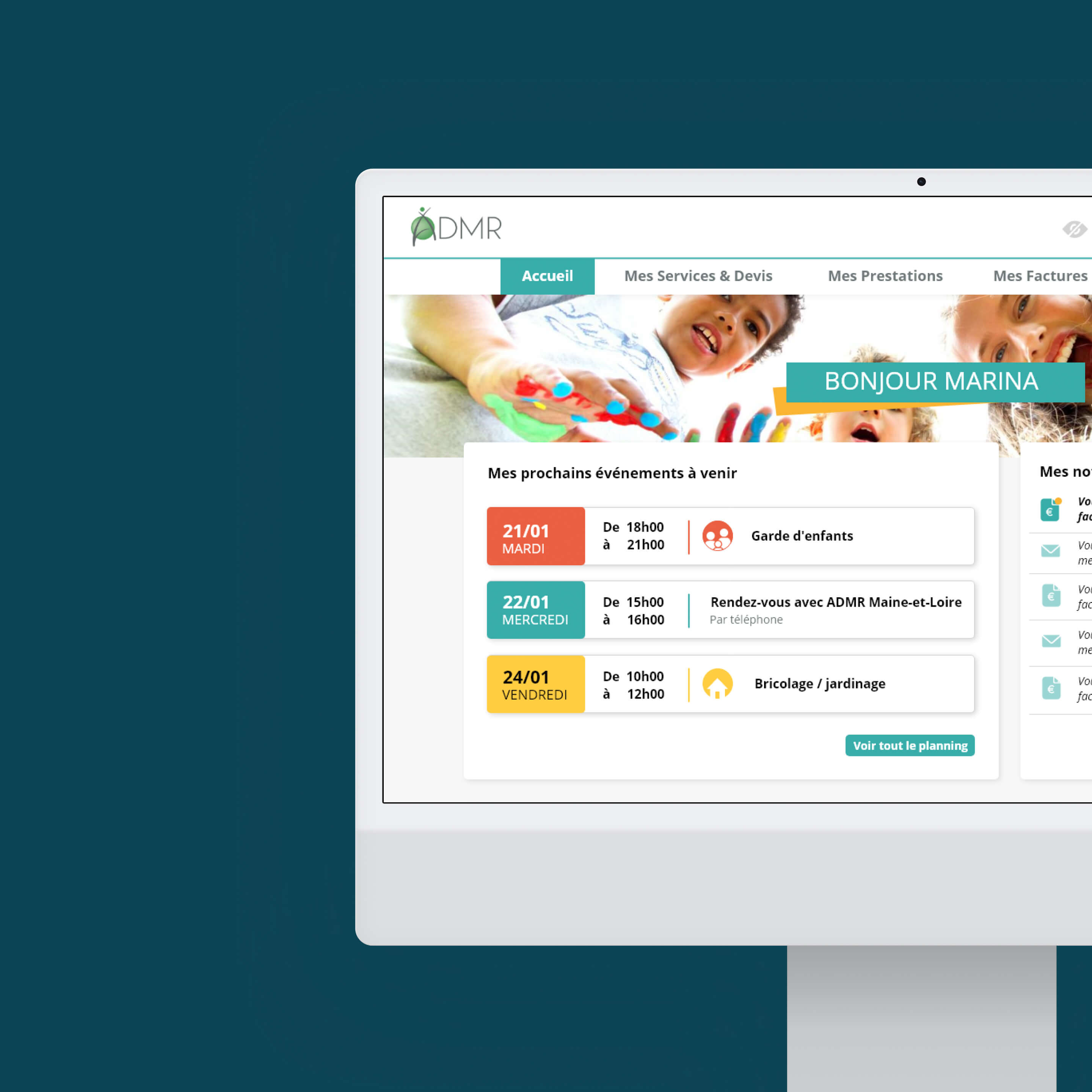
Revolutionizing ADMR's diverse home care workflows through UI/UX design, creating a unified online customer area and back-office portal. The challenge involved harmonizing 3,000 associations' varied processes, replacing manual operations with a seamless digital experience.

In the heart of France's rural areas, ADMR stands as the leading associative network providing essential home care services. With a compassionate mission, ADMR's 94 Provincial federations and approximately 3,000 local organizations, supported by 100,000 employees and 105,000 volunteers, tirelessly extend their care to the elderly, sick, disabled, and families with children. This expansive network serves around 800,000 clients, forming a crucial backbone in enhancing the well-being of communities across France.

The challenge was to revamp ADMR's diverse home care workflows through UI/UX design, creating a unified online customer area and back-office portal. This entailed harmonizing 2,700 associations' varied processes, replacing manual operations with a seamless digital experience.
Photo by Centre for Ageing Better Unsplash.


I led the UI/UX Design of a unified online customer area and back-office portal, optimizing communication for ADMR. This digital transformation enhanced service delivery, prioritizing web accessibility, responsive design, and WCAG guidelines. I employed card sorting and prototypes, collaborating with a diverse team for a successful 2021 launch.

The initial research, inclusive of user interviews, stakeholder sessions, and competitive analysis, laid a solid foundation. Yet, to truly gain user empathy within the team, I extended this groundwork. By defining user personas and synthesizing use case scenarios, I added depth, uncovering vital insights into user needs. This complementary approach honed our focus on addressing assistance requirements, limited computer literacy, and accessibility challenges, steering the project toward a more empathetic and user-friendly digital experience.

How Might We design a platform that centralizes and improves communication both externally, delivering superior services to end customers, and internally, streamlining backstage operations for staff?

I crafted a cohesive information architecture from scratch for both the online customer area and its associated back office, meticulously designed in mirror. I utilized card sorting techniques, aligned staff and user mental models to ensure a unified and intuitive information architecture.


Card sorting in action: Collaborative efforts to structure information and define a user-friendly Information Architecture aligned with users' mental models.

Back office platform's IA mirrors the customer area, ensuring seamless workflows for optimal efficiency.

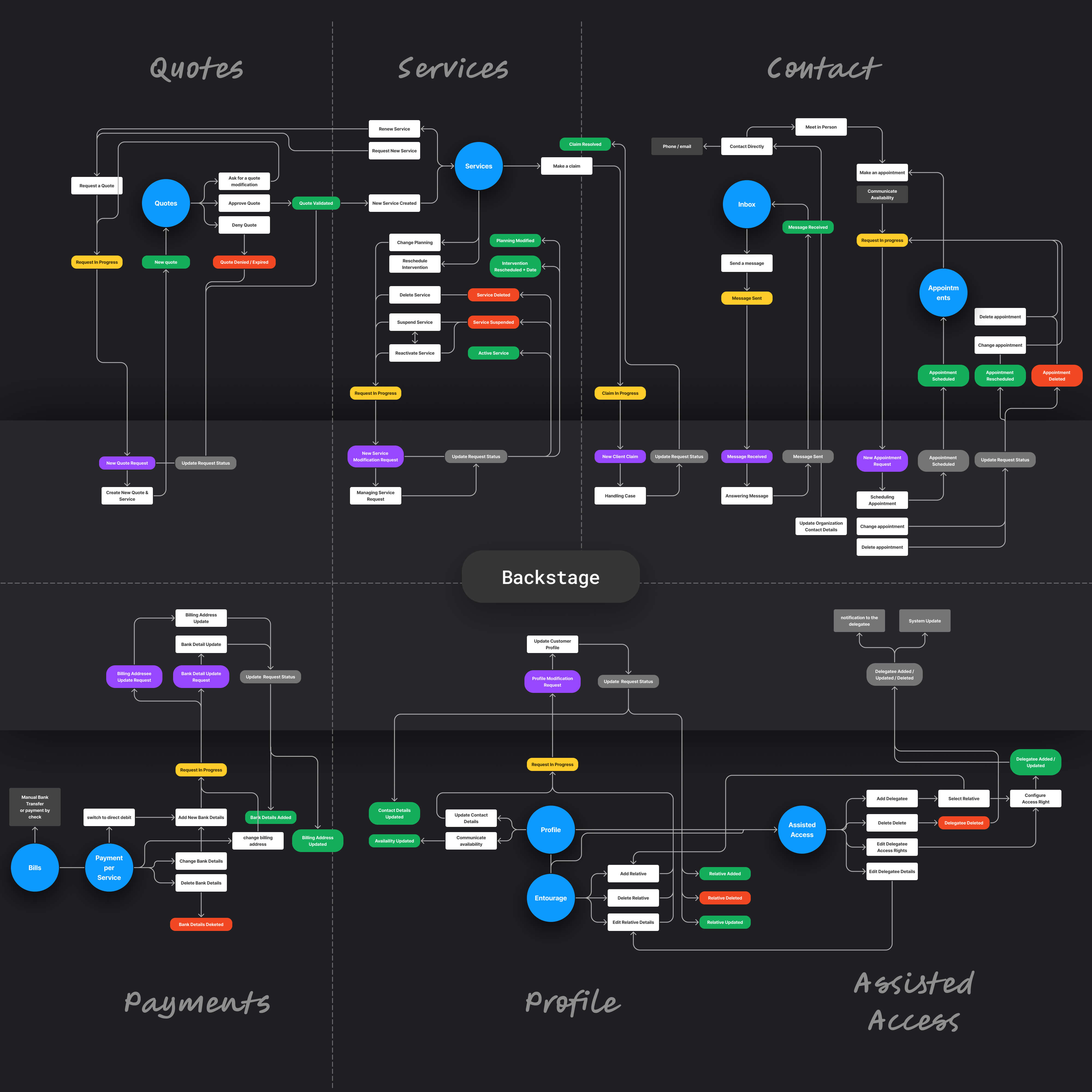
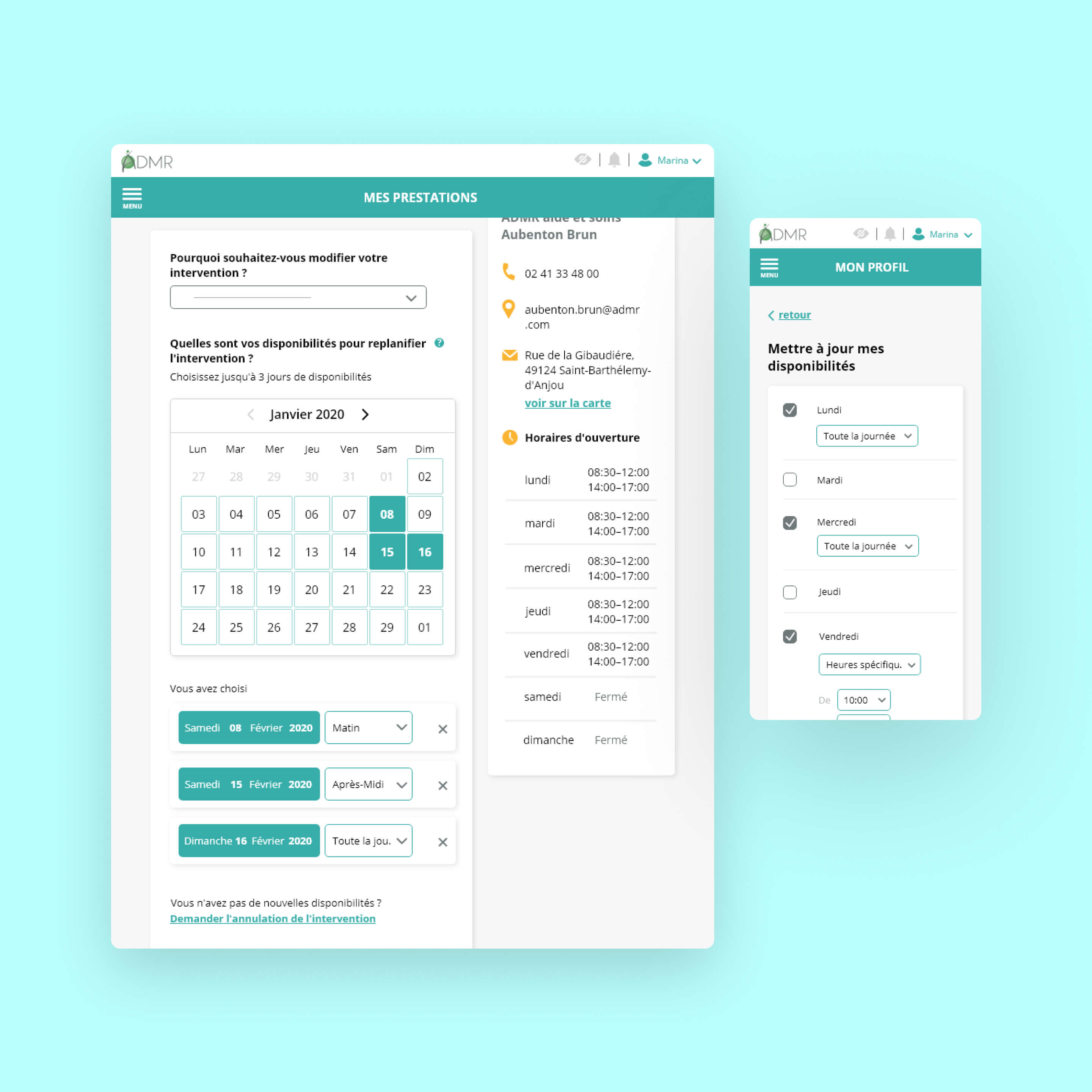
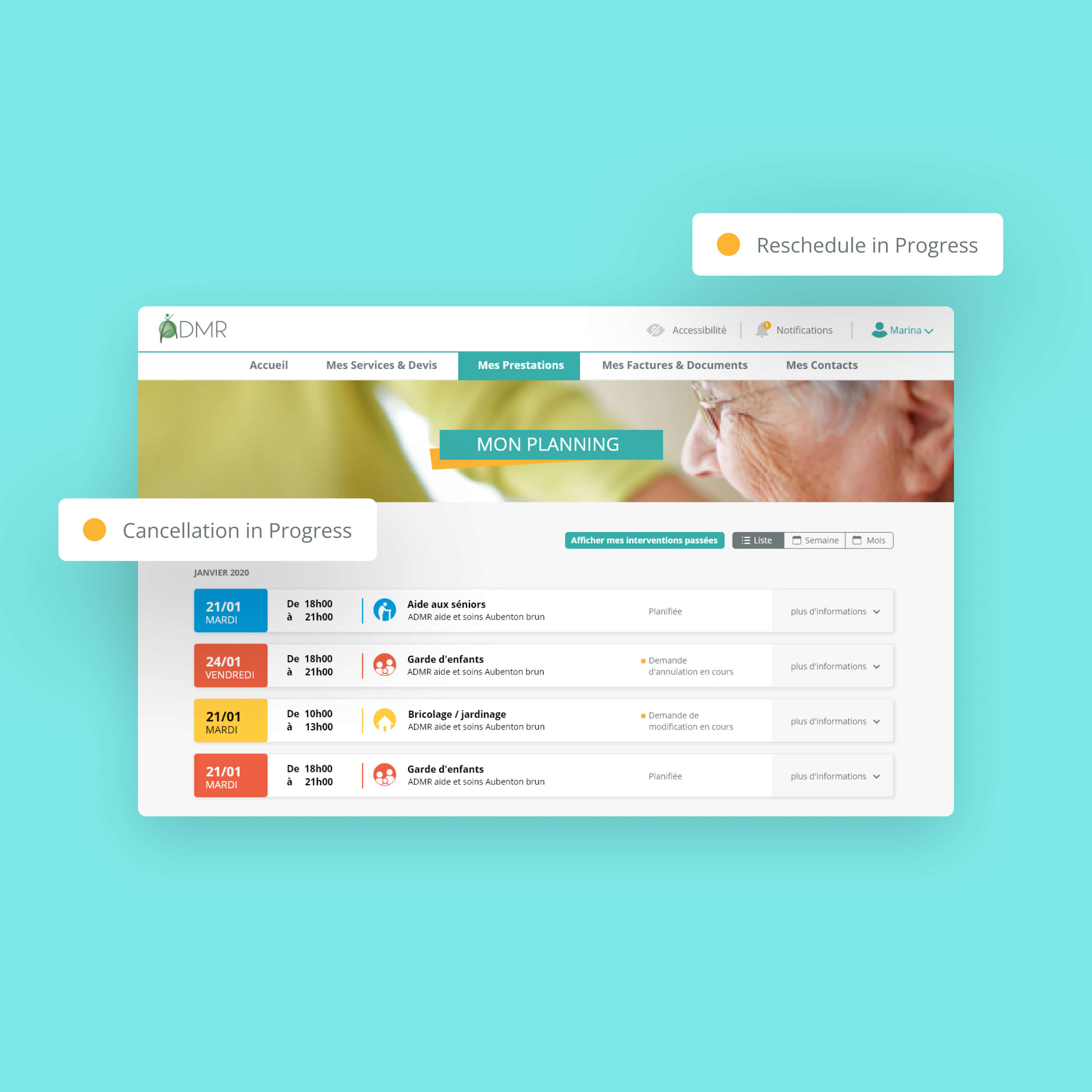
I addressed real-time challenges in customer request handling by introducing specific forms, accommodating delays in staff processing. Users communicate availability; ADMR proposes schedules later, while visual indicators keep customers informed. Redirection links guide users to upcoming services, and a newly created back office mirrors the customer area, optimizing staff efficiency.

Flowchart illustrating one of the customer request handling process.

Adapted online forms address staff's delayed handling of customer requests, ensuring streamlined interaction.

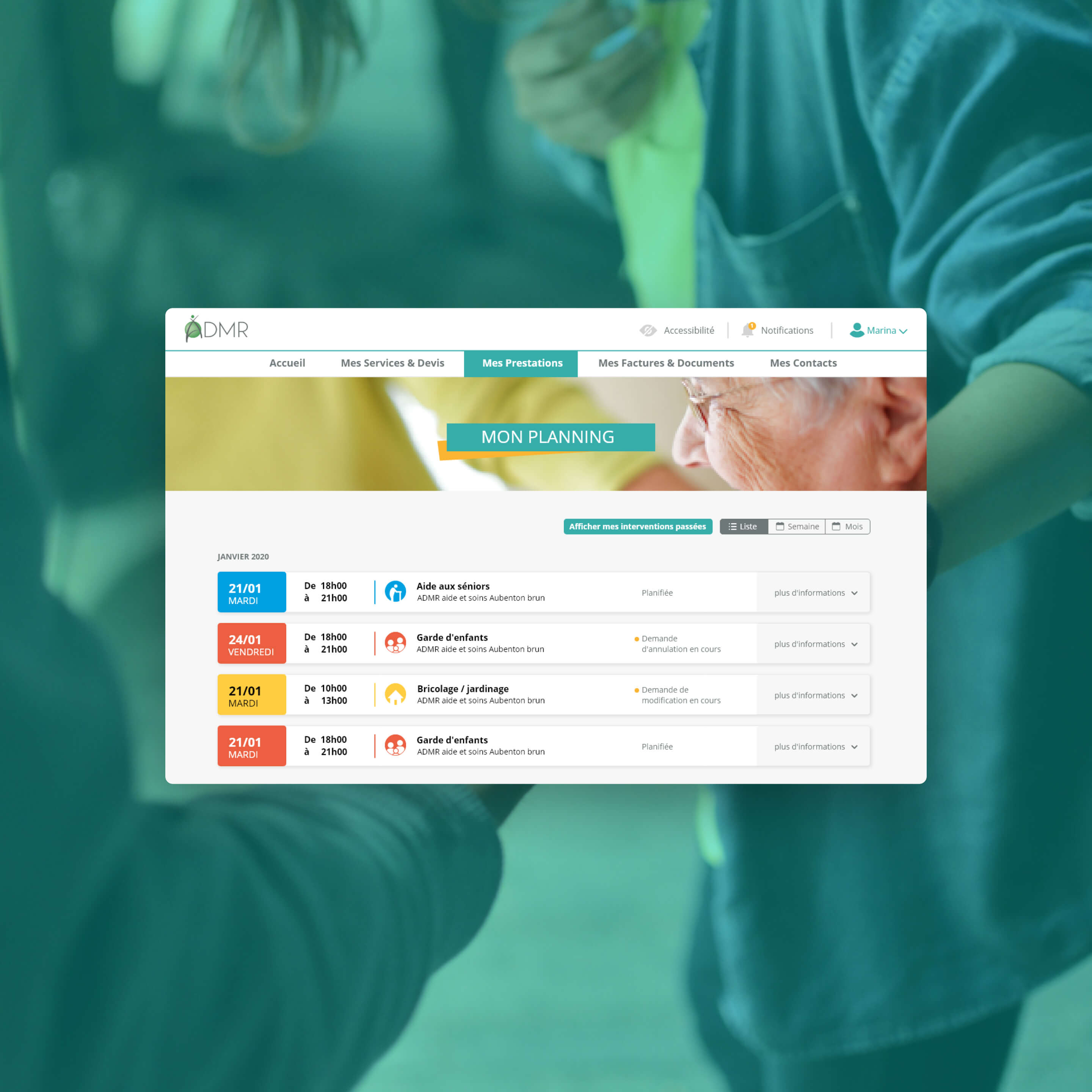
Incorporating status indicators was crucial, providing users with visual cues to track the progress of their requests. This simple yet effective feature ensures transparency and empowers customers by keeping them informed at every step of their journey within the platform.

The new back office platform mirrors the customer area, optimizing staff efficiency and internal workflows. This seamless integration ensures that the staff can navigate and manage operations effectively.

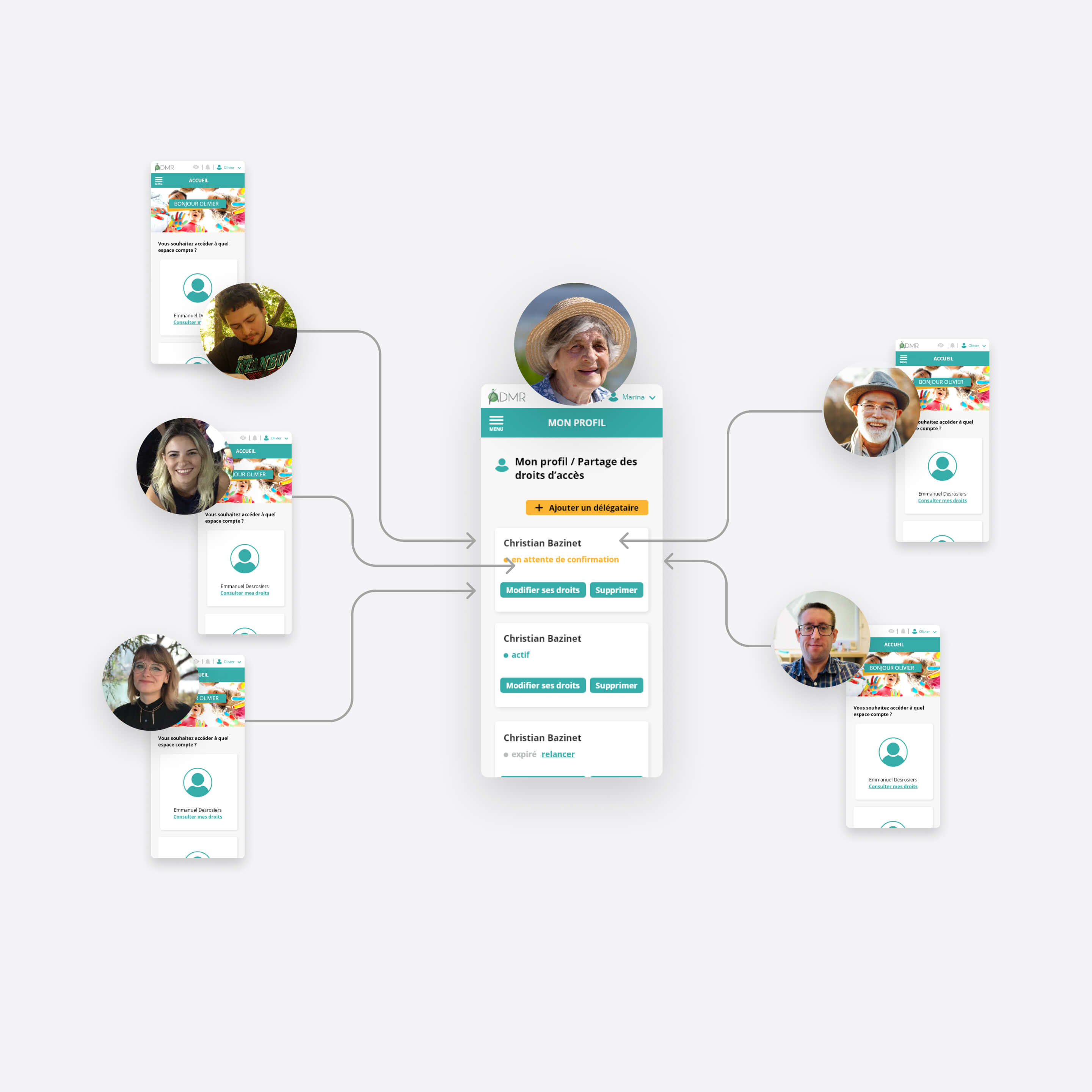
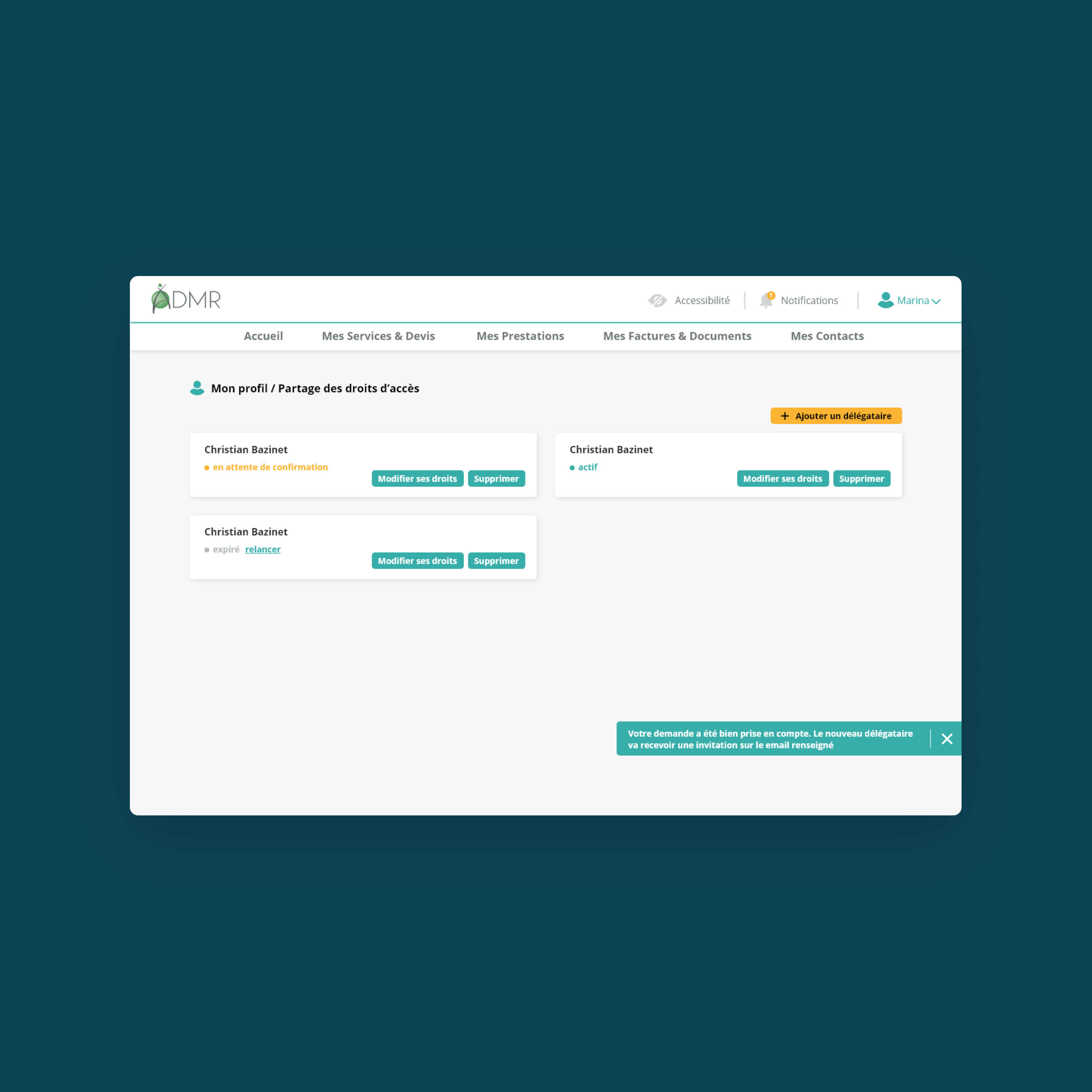
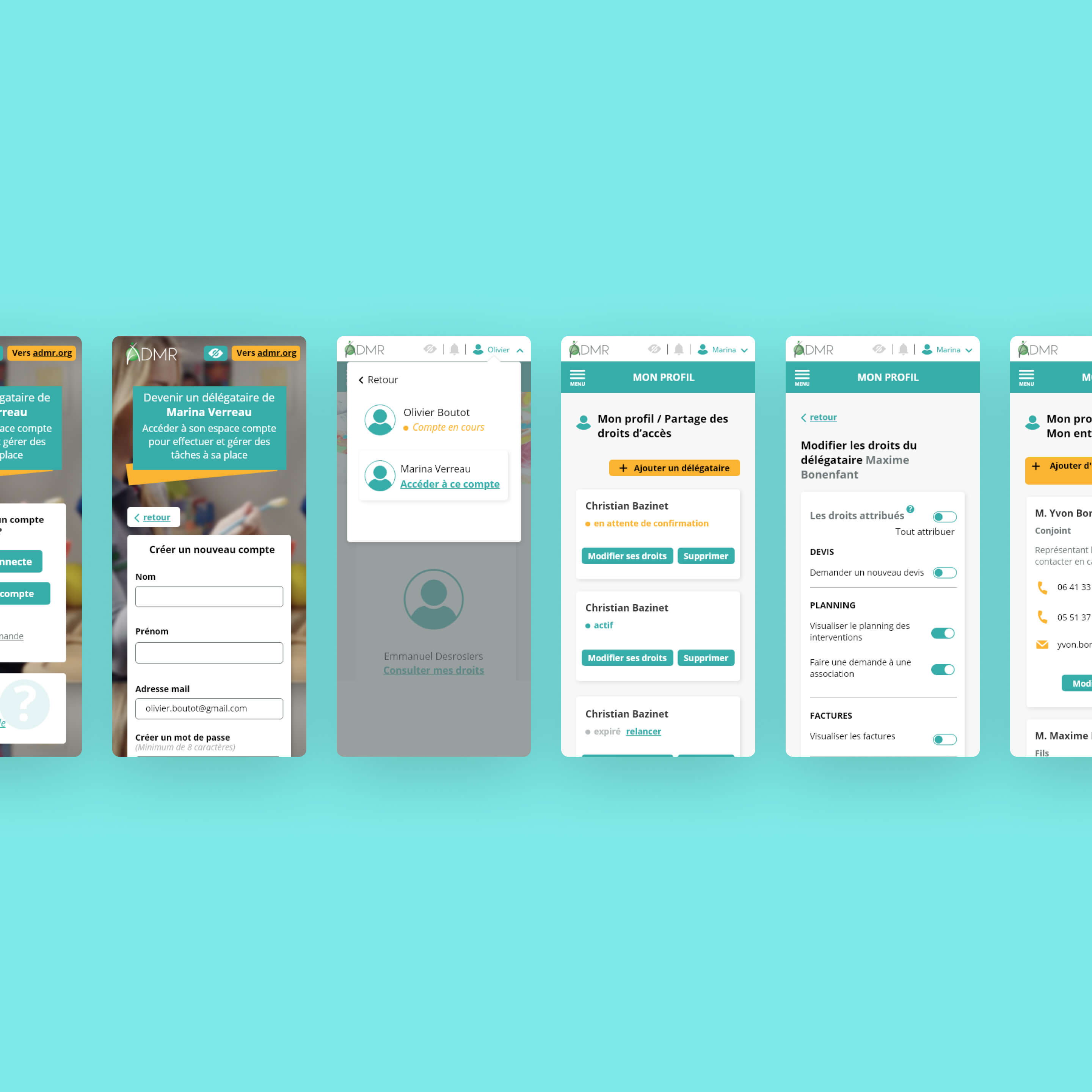
I empowered vulnerable users by enabling secure entourage involvement. Clients seamlessly choose a relative or entourage member for assisted access, while designated persons receive exclusive identifiers to connect securely to the linked customer account.


I enhanced user support through features like a chatbot, contextual help, and readily available contact details at key points, ensuring immediate assistance throughout the user journey.


Contact details strategically accessible throughout the user journey, with a dedicated section for reaching ADMR.
I implemented responsive design to ensure optimal user experiences across diverse screen sizes, enhancing accessibility and usability.

In crafting the visual design, paramount importance was given to inclusivity, steering clear of stigmatization for elderly and handicapped individuals. The result: a minimal and lively design that seamlessly integrates ADMR's brand guidelines, incorporating strong primary colors associated with distinct service types.

The team aimed for WCAG compliance to ensure optimal web accessibility for the elderly and individuals with disabilities. Early on, tasks were distributed among ADMR, designers, and developers for shared accessibility responsibilities.

The implementation of custom features, such as adjustable text size, contrast, and dyslexic-friendly fonts, along with linearized content and identifiable clickable links, fosters a user-friendly and inclusive digital experience.

The project delivered a unified digital experience for ADMR, impacting 94,000 employees, 720,000 users, and enhancing the overall efficiency of home care services (the platform was released in 2021). My learnings encompassed a holistic approach to design, emphasizing the importance of both frontstage and backstage operations for a successful user experience.